Showing posts with label Nissan Leaf. Show all posts

Monday, February 17, 2020

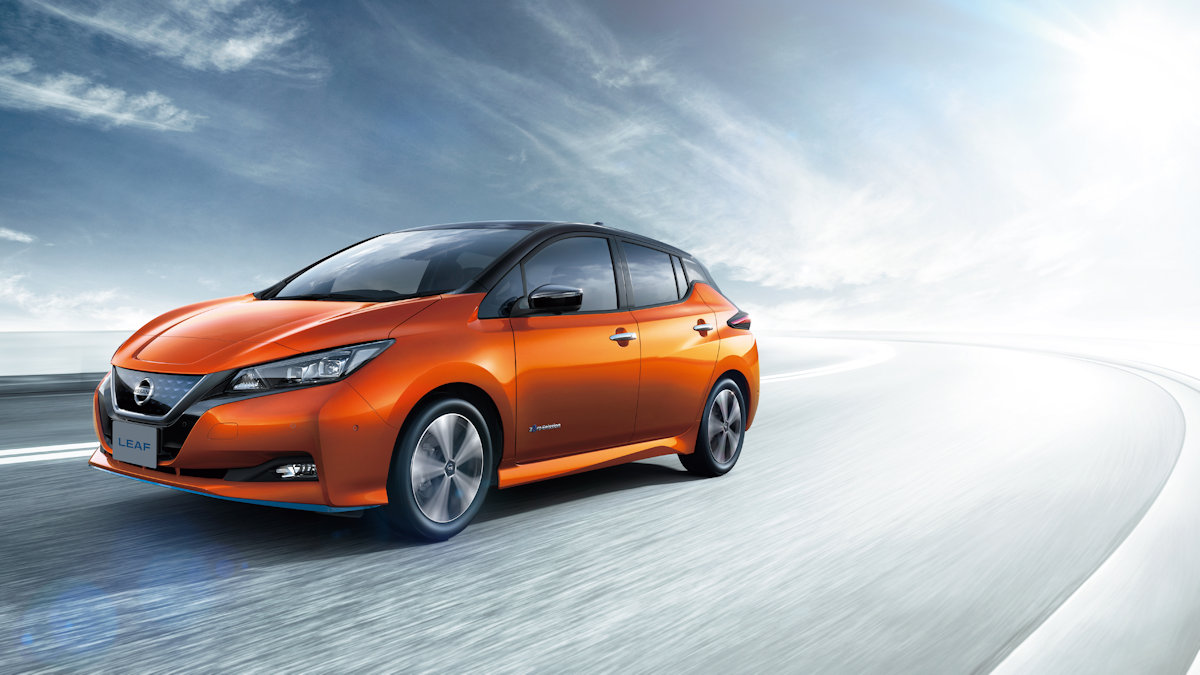
The Nissan LEAF Proves How Reliable EVs Can Be


While the headline at the 2020 J.D. Power U.S. Vehicle Dependability Study was Hyundai’s luxury division, Genesis beating both Lexus and Porsche, there’s also one interesting takeaway in the study: the Nissan Leaf just beat everyone else as the most dependable compact car.

The Nissan Leaf ranked as the top performing non-premium vehicle, and at the top of the compact car segment with a score of 83 problems experienced per 100 vehicles (PP100)—figures that help it beat the likes of the Toyota Corolla.

Since the J.D. Power Vehicle Dependability Study takes into account the first three years of vehicle ownership, this result is a validation of sorts of how reliable a Full EV could be. After all, the Leaf makes history as being the first EV to be included as one of the top results in the study’s 31-year history.

It also matches what the U.S.-based Kelley Blue Book has noted. Factoring in the vehicle purchase price, expected depreciation, fuel cost, finance charges, insurance, maintenance costs, and repair costs, the Nissan Leaf has the lowest cost of ownership even compared to the likes of the Toyota Corolla (the lowest one powered by a conventional gasoline engine).

Tuesday, February 11, 2020

The Nissan Leaf Will Now Lull You to Sleep


Some parents will probably know that car rides have this magical effect of lulling babies and toddlers to sleep. Apparently, there’s a reason behind this and it’s down to the naturally soothing sound frequencies of internal combustion engines. But what happens if everyone shifts to electric? What then?

Engineers at Nissan seem to understand the situation. Here’s something Paul Speed-Andrews, Noise and Vibration development manager at Nissan said: “The quiet soundscape of an EV might not be as effective as internal combustion engine (ICE) cars [when it comes to lulling babies to sleep]. Combustion engines transmit a sound frequency, a combination of white, pink, and brown noise varied in tone–creating an orchestral soundscape that is especially soothing and comforting to young children.”

And so, Nissan collaborated with Sound Designer and Sleep Coach Tom Middleton to create a track specifically made to help kids sleep. Made up of five three-minute tracks, the soundscape mimics the peaceful audio frequencies of a humming combustion engine, but without the tailpipe emissions. Moreover, they’ve optimized the track to emit a wider range of “hypnotic” frequencies, too.

You can actually download the MP3 file for yourself here. Drop us a line below if you think it worked for you.

Tuesday, January 14, 2020

3 Key Things Filipinos Need to Know About Electric Vehicle Ownership


The automotive industry globally is going through a major shift in terms of electric mobility. Locally, the Philippines is undertaking many initiatives in terms of government support and additional infrastructure to cater to this automotive evolution. Also, more consumers are beginning to see the value of electric vehicles and their positive effects on congestion, and noise and air pollution.

Is the Philippines ready for electric vehicles? Studies seem to indicate that it is. According to a Frost & Sullivan survey, 46 percent of Filipinos are considering one as their next vehicle purchase.

Nissan, the creators of the world’s best-selling electric car, the Nissan Leaf, is leading the conversation in Asia around electrification. As the Japanese automaker gears up for the introduction of the Leaf in the Philippines, here are some key things Filipinos need to know about electric vehicles:

#1. Range

The Nissan Leaf can cover 311 kilometers when fully charged. That’s the distance between Manila and San Fernando, La Union. This allows drivers to easily travel to Calamba, Laguna (53 kilometers), Baguio, Benguet (245 kilometers), or Baler, Aurora (274 kilometers) and not have to worry about completely losing battery charge while on the road. For reference, the average driving distance around Metro Manila per day is only 13.2 kilometers.

#2. Charging

There are three primary ways to charge an EV, according to consumer preference and ease. Charging at home, usually overnight, with a standard universal cable can be done right away and takes 12 to 15 hours to fully charge the Nissan Leaf. A wall box can also be installed at home or in any establishment, and takes between five to seven hours per charge session. And there are currently 23 public charging stations in the Philippines, and more are being added.

#3. Environmental Impact

Electric vehicles produce zero direct emissions, which means they are a good environmental choice. Moreover, electric vehicles allow a reduction in noise pollution, a growing issue in urban centers. A Nissan Leaf has a running noise level of 21 decibels, compared to the average 82 decibels that a car produces when driving at 80 km per hour.

To support sustainable initiatives and reduction of emissions across Southeast Asia, Nissan has already introduced the Nissan Leaf to several countries like Thailand, Malaysia, and Singapore. In 2020, the Philippines will be the next country to join the electric mobility movement.

“Nissan is committed in meeting Filipinos’ demand for sustainable, safe, and smart mobility by bringing the Nissan Leaf to the country. We will continue to support EV adoption in the Philippines by educating the public on the advantages and benefits of EVs for consumers and for the environment,” shares Nissan in the Philippines President and Managing Director Atsushi Najima.

Wednesday, January 8, 2020

Nissan's e-4ORCE is the Spiritual Successor to the GT-R's ATTESA All-Wheel Drive System


Nissan’s ATTESA or Advanced Total Traction Engineering System for All-Terrain is famous for its application in the GT-R supercar among others. Well, the Japanese automaker just showed off its most direct successor and its name? e-4ORCE.

Showed off in a prototype Nissan Leaf in Japan last year, e-4ORCE provides instant torque to all four wheels to deliver balanced, predictable power, and handling on par with many premium sports cars.

The “e” represents Nissan’s technologies enabled by a 100 percent electric motor drive system. “4ORCE,” pronounced “force,” evokes physical power and energy with “4” standing for the all-wheel control driving capability.

The technology was born from lessons learned in the development of the Nissan GT-R's ATTESA E-TS torque split system and the Nissan Patrol's intelligent 4X4 system. Engineers developed the e-4ORCE technology to specifically manage electric vehicle power output and braking performance to be smooth and stable.

Unparalleled ride comfort is the result of the e-4ORCE technology’s ability to minimize vehicle pitch and dive. This is accomplished by employing regenerative braking from both front and rear motors, making city stop-and-go traffic less jostling. Similarly, on rough, bumpy roads and when accelerating, motor control is optimized to maintain ride comfort by minimizing irregular movement.

e-4ORCE increases driver confidence by faithfully tracing the driver's intended line thanks to ultra-high-precision motor and brake control. With the confidence to handle such a variety of road surfaces, even for novice drivers on slippery surfaces, driving becomes more enjoyable.

The first vehicle that’ll benefit from e-4ORCE will be on the production version of Nissan’s zero-emissions crossover, the Ariya which was already shown in concept form at the Tokyo Motor Show last year.

Saturday, December 21, 2019

Nissan Turns Its Leaf into a (Christmas) Tree to Show Power of Regenerated Energy


Nissan will be dashing through the snow this Christmas with a bright festive Nissan Leaf powered by its own regenerated energy.

To bring Christmas cheer while celebrating the power of regenerative energy creation, the special one-off vehicle sees the Nissan Leaf transformed into a Nissan (Christmas) Tree (get it?). Decked out in a spectacular light display, the Nissan Tree showcases the way the electric car regenerates power when braking or decelerating.

Two driving functions provide energy regeneration in the Nissan Leaf. The Nissan Leaf e-Pedal allows the driver to start, accelerate, decelerate and stop using only the accelerator pedal. The e-Pedal also helps the car to harvest energy via regenerative braking. This works by recycling the energy from the movement of the car during braking or deceleration, which then goes straight back to the batteries, where it is used to recharge them. Meanwhile, B mode is a driving function that regenerates energy under braking, with drivers using the traditional brake pedal as normal.

Fitted with thousands of LEDs, shimmery baubles and a reindeer, the car is brighter than Rudolph’s nose. The sparkling display reminds sustainably-minded drivers about the energy generation made possible through owning an electric vehicle. In fact, the average Nissan Leaf driver regenerates 744-kWh of clean energy if they drive 18,000 kilometers. This energy saving is equivalent to 20 percent of the overall domestic electricity consumption of an average European household.

Nissan Leaf drivers would generate enough energy to power up:
  • 266 Christmas trees with 700 incandescent lights for a full hour of joy
  • 297 ovens for one hour to cook your Christmas dinner
  • 744 televisions for five hours to watch your favorite Christmas movies
  • 10,783 houses with 1,000 LED lights for five hours

Thursday, October 24, 2019

You're Looking at Nissan's Next High-Performance Car


Nissan is showing off what high-performance EV motoring could possibly look like with the introduction of their first high-power, twin-motor all-wheel drive system.

Set to be introduced in the company’s next generation of EVs, it’s now being tested on a modified Leaf e+. Underneath, it gets an enhanced all-wheel drive system powered by front and rear high-power motors integrated with a Nissan developed chassis control technology.

Using separate front and rear electric motors, the powertrain generates around 308 horsepower of maximum power and 680 Nm of maximum torque. This output is complemented by the ultra-high-precision motor control provided by Nissan’s advanced EV technology which offers highly responsive, yet uncommonly smooth, acceleration.


In addition to optimizing front and rear torque allocation, the system applies independent brake control at each of the four wheels to maximize the cornering force generated by each tire. This lets drivers enjoy cornering that faithfully follows their intentions with minimal steering.

More than just performance, Nissan says this setup will provide better comfort as well. Vehicle pitch and dive are minimized by adding regenerative rear motor braking to the usual front motor regenerative braking. When slowing down on city streets, for example, this helps keep passengers from being shaken back and forth. This reduces the potential for motion sickness and related discomfort. Similarly, on rough, bumpy roads and when accelerating, motor control is optimized to maintain ride comfort by minimizing irregular movement.

With this technology, Nissan says their next-generation EVs will be a “true breakthrough” by achieving huge leaps in acceleration, cornering, and braking performance on par with the latest sportscars.

Sidebar Title

Main Tab Menu